
Resilience at 81: Bouncing Forward
“You may encounter many defeats, but you must not be defeated.”
– Maya Angelou
Are We Losing Our Bounce?
Are people today less resilient than we were?
How do you get your bounce back up when your body is no longer twenty-five?
What if resilience isn’t something you’re born with, but something you choose – again and again?
And here’s the big question: Does it get harder with age, or easier?
At 81, I have some opinions.
Definition – resilience: an ability to recover from or adjust easily to misfortune or change
On July Fourth, 2024, while most of America was getting ready for fireworks, I took a headfirst tumble down a set of stairs in my own home. Being a very stubborn male, I crawled back up the stairs while my wife, Susan, told me we needed to call an ambulance. I went to bed instead. Then I got up, passed out and did more damage.
The next morning, I gave in.
An ambulance, the police and a massive fire truck filled our driveway. My first thought was that the neighbors would assume someone had bitten the dust. (Not yet.)
The tally: seven staples in my scalp, three fractured ribs, and a host of bruises in places I won’t describe. Six days in the hospital. Three weeks in rehab. Then home, walking slowly with a cane.
Here’s what I learned.
Resilience at 81 is not about bouncing back.
It’s about bouncing forward.
A valve that won’t quit
In 2009, my heart was taken out of my body, placed on ice, and a pig valve replaced a defective one. The valve was supposed to last twelve years, at most. That was seventeen years ago. It’s still doing its job.
So am I.
And I’m doing my part. Recently, I lost 50 pounds – to take the weight off my knees and make it easier for my heart to do its work. Nobody handed me that. I chose it.
It reminds me of the old 1989 television Timex Watch commercial: “It takes a licking and keeps on ticking.”
Not bad for a valve that was supposed to retire 5 years ago.
I don’t tell you this to brag. (Well, maybe a little.) I tell you because at every one of those turning points – the diagnosis, the surgery, the fall – I had a choice about which mental movie I would play. The one where it’s over? Or the one where I’m back in the gym, back at my desk, back on stage?
The body heals. But the mind decides how.
“Psychological resilience is not a fixed trait that you were born with, such as the color of our eyes. It’s a set of skills that every one of us has the capacity to develop through our lives.” – Tere Narula, MD
Skills. Not luck. Not genes. Skills. And skills can be practiced at any age.
Here are five I lean on.
Five tools for bouncing forward
Tool #1: Make friends with reality.
Denial is expensive. I spent one stubborn night refusing an ambulance, and my ribs paid the bill. Acceptance is not giving up. Acceptance is where the plan begins. You cannot change what you refuse to see.
Tool #2: Say, “Isn’t that interesting?”
When the mind races to the worst case – and at 81, it knows the way – stop. Observe the thought. Say to yourself, “Isn’t that interesting.” Then choose your next thought. In rehab, when I couldn’t get out of bed without help, I said it a lot. It didn’t fix my ribs. It fixed my attitude, and my attitude helped my ribs.
Tool #3: Let people help you – and help them back.
During my stay, more than 25 people took care of me. I became a gentle questioning machine. I asked about their long shifts, their children, their lives outside work. Many were single parents carrying enormous loads. Something remarkable happened: the more I connected, the less I suffered. We are wired for reciprocity. Resilience is never a solo act. And, build your social ties.
Tool #4: Have something to look forward to.
When I anticipate something pleasurable – a new book, a movie, planning a cruise – it puts a sparkle in my present. Research backs this up: hopeful people adapt more quickly to negative life events. Hope acts as a buffer. So, give yourself a date on the calendar worth getting better for.
Tool #5: Keep playing.
The child in me who wanted to see magic never really left. He just grew a white beard. Laughter, curiosity and a willingness to look a little foolish are not luxuries at this age. They are medicine.
The skill that matters most
As I wrote earlier this year, the difference between amateurs and professionals is not mistakes. It’s how fast they recover.
The same is true of living.
You will fall. Maybe not down the stairs, I hope. But you will fall – a diagnosis, a loss, a disappointment, a morning when the mirror isn’t kind. The question is never if. The question is what story you tell yourself on the way back up.
At 81, I don’t measure resilience by how far I fall. I measure it by how quickly I choose to stand up – and whether I’m still curious when I do. Fall seven times. Stand up eight.
Then go find something fun to do.
The bounce is still in you. It’s just waiting to be practiced.
IMAGINE THAT!
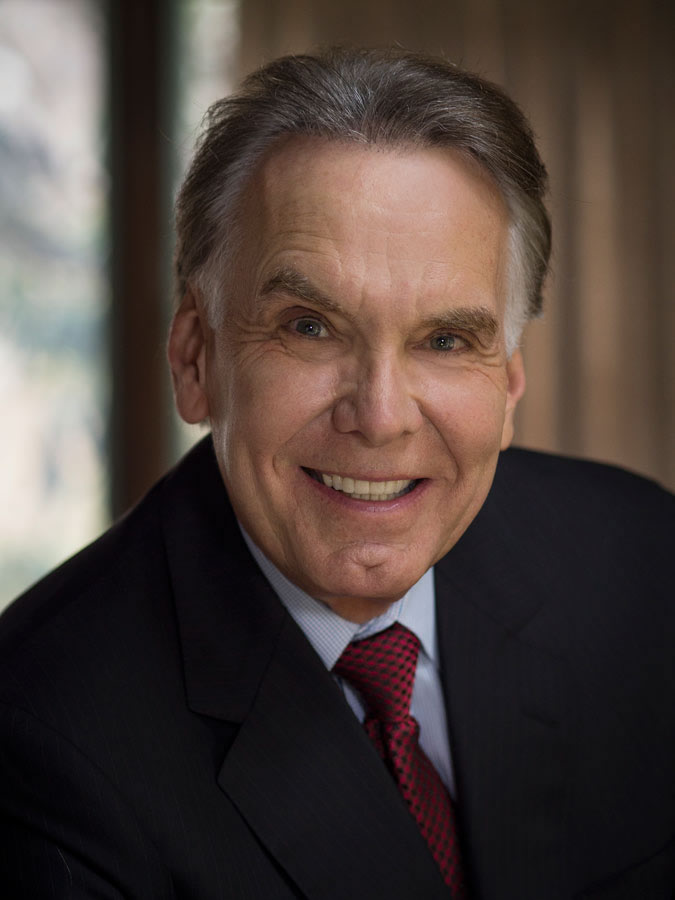
James Mapes is the founder of Quantum Leap Thinking™, creator of The Transformational Coach™, expert on the psychology of “applied imagination,” best-selling author, highly acclaimed business speaker, consultant, seminar leader and personal excellence coach.