
The Slippery Slope of Hope
“We must accept finite disappointment, but never lose infinite hope”
– Martin Luther King Jr.
To hope or not to hope – that is the question.
What do you believe? Is ‘hope’ positive or negative? This article may clarify the question.
I had four surprises doing the research.
Let’s begin with the latest research:
Surprise #1: A massive 14-year study of 25,000 adults (concluded in late 2025), conducted by The Household, Income and Labor Dynamics in Australia (HILDA) Survey, revealed that individuals with high levels of hope have significantly better long-term outcomes in education, employment, and physical health.
Surprise #2: A groundbreaking 2025 study from the University of Missouri found that hope is the most consistent predictor of a meaningful life, outperforming other positive emotions like happiness, gratitude, and excitement.
Surprise #3: A study published in Stress and Health (2024) suggests that during periods of prolonged stress, future-oriented hope is more effective at sustaining professional engagement and reducing distress than “living in the moment” through mindfulness.
Surprise #4: Researchers demonstrated that hopeful people adapt more quickly to negative life events (such as financial loss or serious illness). Hope acts as a “buffer” that minimizes the drop in life satisfaction during crises.
I agree with all the above but, exactly, what is this mercurial thing called “hope”?
There is often confusion as to what hope is or isn’t?
– Hope is often misunderstood as ‘blind optimism’ or ‘false hope.’
“The fantasy that you are different from the average is the first clue to ‘false hope’.”
-Dan J. Tomasulo PhD.
Blind Optimism is telling yourself everything will work out for the better, even when the facts suggest the opposite. Hope is not useful when we have unrealistic expectations or use ‘wishful thinking’. This is often referred to as ‘toxic positivity’ or ‘false hope’- acting as a blinder to reality.
Research strongly suggests that hope is not about ignoring reality; it’s about removing the blinders and engaging with reality to move forward in a positive direction with specific goals and resilience.
– Psychologists define hope as a goal-driven mindset.
It involves believing that you can identify meaningful goals, figure out ways to reach them, and stay motivated even when things get hard. In other words, hope is something you do, not just something you feel. It requires that you stretch your imagination to embrace the ideal ‘end-result’ and go for it.
Psychologist C. R. Snyder suggests that “clear goals foster hope. Otherwise, we are just wishing, dreaming, or keeping our fingers crossed. Clear and realistic goals require carefully defined pathways for achievement. We may need guidance and encouragement along the way.”
-What makes hope especially captivating is its role during hardship.
Studies show that people with higher levels of hope have lower rates of depression and anxiety, recover more quickly from trauma, and demonstrate greater emotional inner conflict under stress.
Rather than eliminating pain, hope reframes it. Difficult experiences become challenges to navigate rather than verdicts on the future.
“Psychological resilience is not a fixed trait that you were born with, such as the color of our eyes. It’s a set of skills that every one of us has the capacity to develop through our lives.”
– Tere Narula, MD
Expectations are tricky because the subject ignites a persistent question that rattles around in my mind.
Aren’t the following 2 sentences the same question?
Is it possible to live without expectations? My gut feeling is “No.” However, there are mental tools or mind games to limit our disappointment. My 45+ years’ experience as a ‘mind coach” is that we have a profound effect as to how we shape our reality.
One of my favorite quotes is attributed to stress researcher and endocrinologist, Hans Seyle: “Negative expectations are the source of all anxiety.”
View ‘expectation’ as gambling. It is a common scenario for one to hope for what is expected. This has endless choices (how people ‘should act,’ material effects, vacations, or holiday gatherings.)
So, when what you hope for, wish for or imagine does not meet expectation, it often creates anger, resentment, or sadness. However, if what is expected meets the expectation, there is happiness or satisfaction.
What can be done? Change what you can change and let go of the rest.
The challenge is to recognize and catch yourself when you get in the false mode expectation/negative impact mode. Yes, it takes self-awareness of your thinking and recognizing you are setting yourself up for disappointment.
– Have something to look forward to.
This certainly works for me and many others. When I anticipate something pleasurable, it puts a sparkle in my present. It doesn’t totally determine my mood, but it certainly has a positive effect.
For me, it might be buying a new book, looking forward to a movie or planning a cruise. For others it may be looking forward to the Super Bowl, going sailing or getting together with a friend or family.
Insight: As strange as it sounds, you are able to feel two emotions at once-happiness and sadness, relief and guilt, or gratitude and anger at the same time.
While it may feel confusing or even overwhelming, learning to recognize and accept these dual emotions can lead to greater self-understanding, resilience, and emotional growth.
“The ability to feel mixed emotions is a sign of maturity. If people can blend contradictory emotions together, such as happiness with guilt, or anger with love, it shows that they can encompass life’s emotional complexity.”
— Lindsay C. Gibson, PsyD. (Applying clinical psychology to clinical practice)
Social worker/author Julie Ohana advocates feeling without judgment. Remind yourself that emotions are not “right” or “wrong”—they’re simply signals from within. Dual emotions are a natural part of being human, and it’s okay to embrace the full spectrum of your feelings.
My clients have told me that learning to accept dual emotions can be a freeing experience. You don’t have to feel you must “choose” one emotion over another or deny one in favor of the other,
Please take the information so you can give yourself permission to experience the full range of your emotional life. This learned skill can make it easier to move through our challenging times and can deepen your insight and understanding of yourself opening space for personal growth, resilience, and emotional peace.
Hope is an antidote to fear, a psychological stabilizer. It protects you from feeling powerless.
Learn to bounce ‘forward’ from setbacks, see setbacks as opportunities and, in the chaotic world of today, keep you grounded and live an ‘exceptional life’.
IMAGINE THAT!
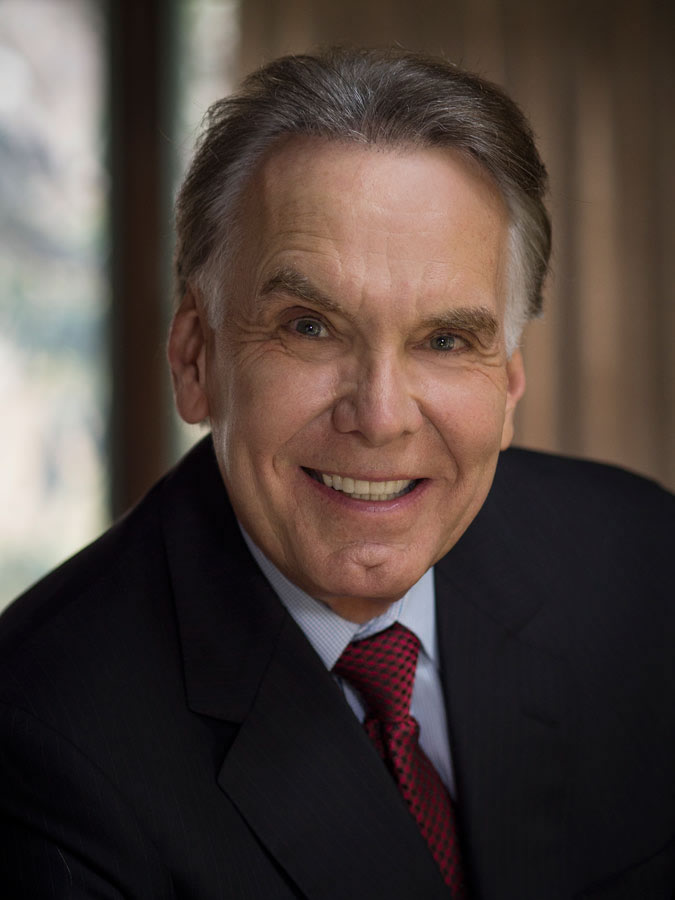
James Mapes is the founder of Quantum Leap Thinking™, creator of The Transformational Coach™, expert on the psychology of “applied imagination,” best-selling author, highly acclaimed business speaker, consultant, seminar leader and personal excellence coach.